命中注定我爱你
광진구, 민선9기 공약 우선순위 주민에게 묻는다…온라인 설문조사_我的网站

一 | 9월 11일까지 구민 누구나 참여…균형발전·상생복지 등 6대 분야 대상조사 결과 실행계획·핵심 추진사업 선정에 반영 김경호 광진구청장. 광진구청 제공서울 광진구는 민선9기 공약사업에 대한 주민 의견을 수렴하기 위해 다음 달 11일까지 온라인 설문조사를 실시한다고 26일 밝혔다.이번 설문조사는 민선9기 공약사업을 구민에게 알리고 주민들의 관심과 정책 수요를 파악해 공약 추진 방향과 우선순위를 정하기 위해 마련됐다. 광진구민이면 누구나 광진구청 홈페이지를 통해 참여할 수 있다.설문은 민선9기 공약사업의 6대 핵심 분야인 △균형발전 △상생복지 △경제활력 △문화교육 △안전환경 △열린소통 가운데 구민이 관심을 두는 분야와 각 분야에서 가장 기대하는 사업 등을 묻는 내용으로 구성됐다.구는 조사 결과를 종합적으로 분석해 주민 관심도가 높은 분야와 사업을 파악할 예정이다. 이를 민선9기 공약사업 실행계획 수립과 핵심·우선 추진 사업 선정에도 반영한다.김경호 광진구청장은 “민선9기 공약은 구민과의 약속인 만큼 정책을 구체화하는 과정에서도 주민의 목소리를 충실히 반영하는 것이 중요하다”며 “구민들의 의견을 바탕으로 우선순위를 면밀히 정하고 생활 속에서 변화를 체감할 수 있는 공약사업을 속도감 있게 추진하겠다”고 말했다.。
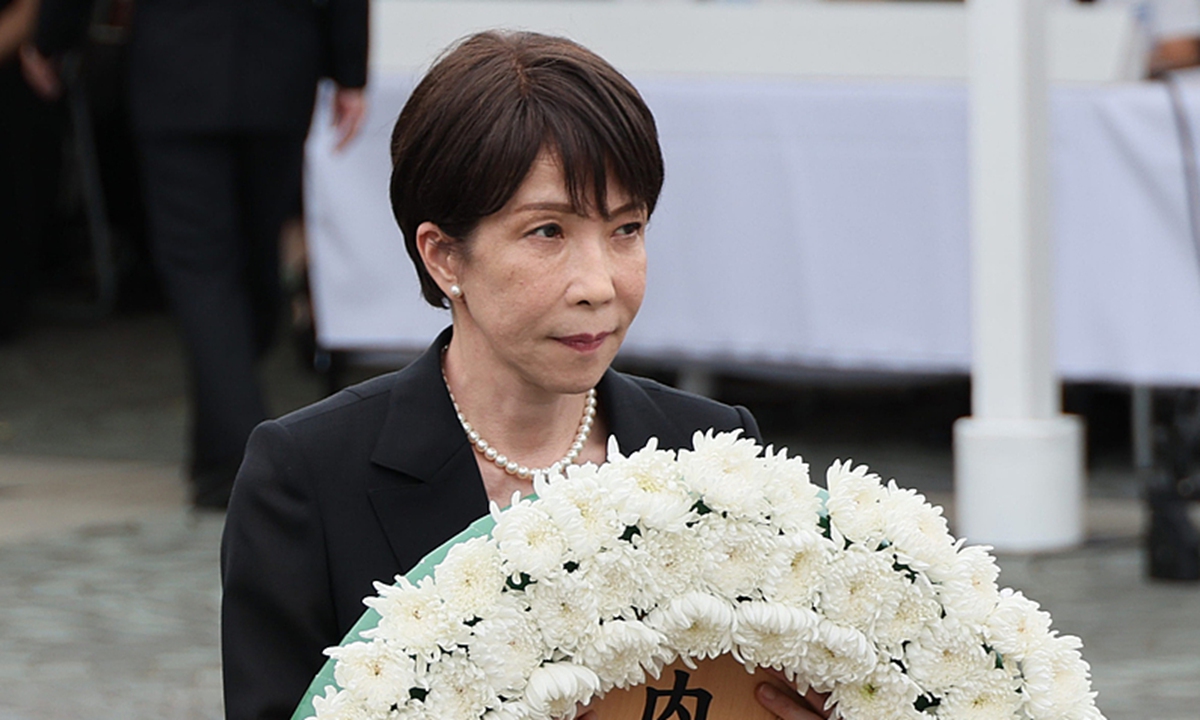
Japanese Prime Minister Sanae Takaichi attends a Nagasaki Peace Ceremony to commemorate the 81st anniversary of the atomic bombing at the Peace Park in Nagasaki City on August 9, 2026. Photo: VCGJapanese officials and members of the public urged the government to uphold the Three Non-Nuclear principles and pursue a security policy that does not rely on nuclear weapons, as Prime Minister Sanae Takaichi maintained an ambiguous stance on the long-held policy during a speech on Sunday marking the 81st anniversary of the US atomic bombing of Nagasaki.
Chinese experts noted that, similar to her ambiguous remarks at the memorial ceremony in Hiroshima, Takaichi stopped short of making a clear commitment to maintaining the Three Non-Nuclear Principles in the future, as her government's stance on nuclear issues has sparked concern and anger among the Japanese public. They also warned that, given Japan's lack of thorough reflection on its wartime aggression, Tokyo's moves to dilute the Three Non-Nuclear Principles should raise alarm across the international community.
"Our country firmly upholds the three non-nuclear principles, and under the pledge that 'Nagasaki shall be the last city to suffer a nuclear attack,' we are promoting realistic and practical initiatives toward the realization of a world without nuclear weapons," Takaichi claimed, according to the Japan Times.
But unlike previous prime ministers, many of whom had pledged that Japan would "continue to uphold" the principles, Takaichi merely described the government's current position without making an explicit commitment about the future, per the report.
As Hiroshima observed the 81st anniversary of the US atomic bombing of the city on Thursday, Takaichi also emphasized that Japan pledges to achieve a world free of nuclear weapons while upholding the Three Non-Nuclear Principles, despite Japanese media noting that she has left the door open for future revisions.
Takaichi's remarks in Hiroshima and Nagasaki that Japan upholds the three non-nuclear principles were largely seen as a reaffirmation of the country's existing policy position rather than a pledge to maintain the principles in the future, Liu Jiangyong, a professor at the Institute of International Studies at Tsinghua University, told the Global Times.
Liu said that currently, some Japanese officials' dangerous remarks on nuclear have sparked criticism among Japanese society. He pointed out that Takaichi only referred to Japan's current adherence to the principles, without explicitly committing to preserving them going forward. Her subsequent focus on broader goals such as achieving a "world without nuclear weapons" has further fueled questions over her actual policy intentions.
Japanese Defense Minister Shinjiro Koizumi claimed in an online program released in July that discussions on nuclear weapons were necessary to strengthen Japan's defense capabilities, according to Kyodo News. While acknowledging that the issue was difficult to discuss in Japan, he claimed it was something that "could not be avoided."
Opposition to the Takaichi administration's nuclear-related moves has emerged across Japan, including from local governments, media organizations and civil society groups.
According to statistics from the Japanese Diet, at least 128 local assemblies across the country had submitted written opinions to the central government or parliament between Takaichi's inauguration on October 21 last year and July 28 this year, calling for the country's Three Non-Nuclear Principles to be upheld, according to Xinhua News Agency.
In an interview with the AFP, 82-year-old Satoshi Tanaka, a campaigner who survived the 1945 attack on Hiroshima expressed frustration that current political leaders like Takaichi are focusing on military capacity at the expense of diplomacy.
"There is so much talk about national security. What about building peace through diplomacy?" he said.
Responding to a question concerning the Japanese authorities are rebuilding Japan's war machine, seeking to revise the Three Non-Nuclear Principles, and pursuing nuclear sharing with the US, even the possession of nuclear weapons, Chinese Foreign Ministry spokesperson Lin Jian said on Thursday that the devastation and tragedies brought by nuclear weapons should never repeat themselves. That said, the particular context of the nuclear explosions should all the more be remembered and the lessons of Japanese militarism's aggression and expansion must forever serve as an alarm.
The Tokyo's moves on nuclear policy have also raised concerns in the international community.
Russia considers the rhetoric of Japanese authorities regarding the need for Japan to revise its Three Non-Nuclear Principles provocative and unacceptable, Russian Ambassador to Japan Nikolai Nozdrev said in an interview with RIA Novosti, which was published on Saturday.
Responding to Koizumi's remarks on nuclear discussion, Nozdrev said "This is the first time in Japan's history, as the only country to have suffered atomic bombings in Hiroshima and Nagasaki, that a sitting defense minister has publicly called for lifting the 'taboo' on discussions related to nuclear weapons. We consider such rhetoric from official Tokyo provocative and absolutely unacceptable."
Japan has yet to fully reckon with its wartime aggression, thus any attempt by Tokyo to move toward acquiring nuclear weapons could pose serious risks to regional peace and global security, Lü Chao, an expert on the Korean Peninsula issue at the Liaoning Academy of Social Sciences, told the Global Times.
Such concerns have become more pronounced as Japan increasingly portrays China as a major security challenge while highlighting perceived threats from other countries, against such a backdrop, any further steps to dilute the three non-nuclear principles are likely to heighten concerns internationally, particularly among countries that suffered from Japanese aggression during World War II, said Lü.
。

二 |
Current article:http://epn3h3.senchuoshaozaodidia.shop/60r/20260826/92165.html
Published on:19:06:35

 阿斯:尤文重启瑟洛特谈判,探讨将冈萨雷斯作为筹码加入交易
 70亿美元买100多名人才 NVIDIA要搞全球最强开源模型:抢中国AI市场
 名记:科尔希望库明加提升组织能力 做到快速阅读比赛&减少停球
 特斯拉中国产Model Y已运抵印度 7月当地开设展厅
 【仓单】8月26日上期所沪铜期货仓单较上一日下降4028吨
 为什么高原地区离太阳更近 反而更冷?
查看所有0条评论>>