
对话打响金“蒜”盘 走上致富路_我的网站
一 | ■ 记者 张宝程 3个月的生长期到了,6月11日一大早,李海山找来30多名帮手,到自家地里收获独头蒜。 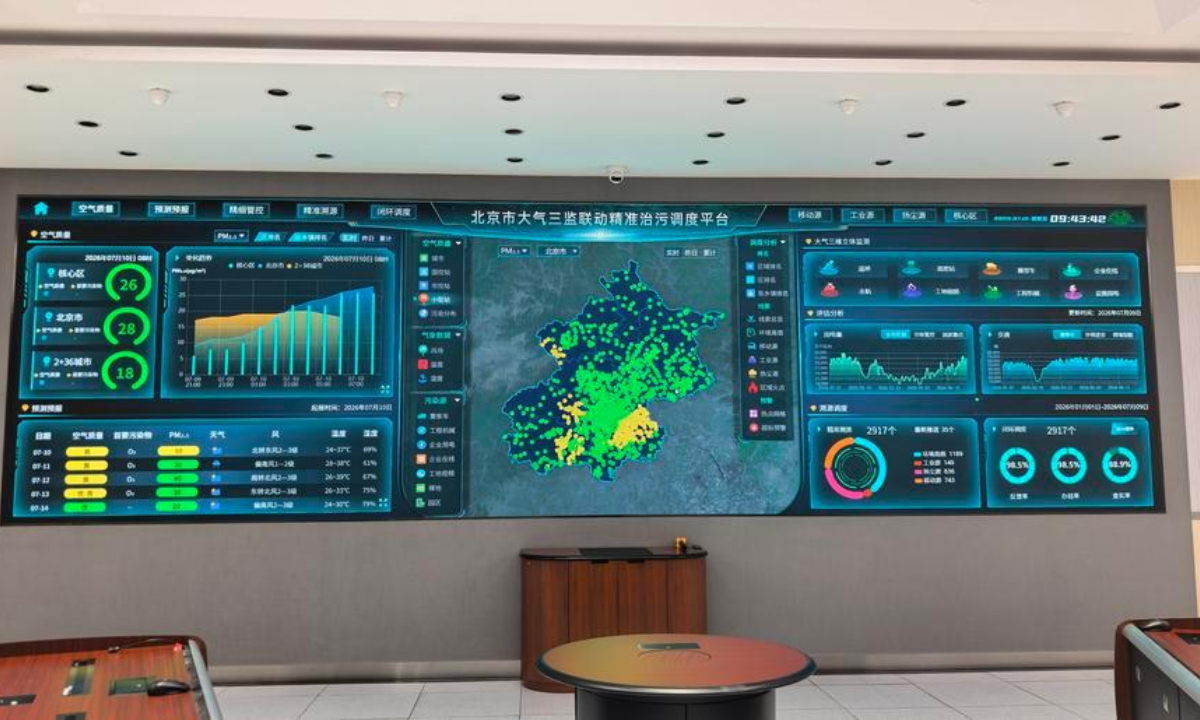 In 2025, Beijing recorded 311 days with good air quality and only one heavily polluted day, compared with 58 heavily polluted days in 2013, when the city officially began releasing PM2.5 monitoring data. The annual average PM2.5 concentration, a key indicator of air quality, fell from 89.5 micrograms per cubic meter in 2013 to 27 micrograms per cubic meter in 2025, a decline of nearly 70 percent. The progress has drawn international attention. The United Nations Environment Programme has highlighted Beijing's experience in improving air quality as a model for other cities. According to experts at the Beijing Municipal Ecological and Environmental Monitoring Center, the cleaner air is the result of a comprehensive system integrating environmental monitoring, scientific analysis, policymaking, regional cooperation and law enforcement -- with digital technologies now woven into every link of that chain. MORE TARGETED APPROACH Effective governance begins with accurate monitoring. Beijing has established a multi-level air-quality monitoring network. Figures show 35 standard monitoring stations across the city continuously measure six major pollutants, while more than 1,000 compact sensors deployed across communities and townships provide more detailed information on local air-quality variations. The monitoring system was gradually built by the Beijing Municipal Ecological and Environmental Monitoring Center, one of China's earliest ecological and environmental monitoring institutions, responsible for monitoring Beijing's air, water, noise, soil environments and ecosystems. The center has developed an analytical system that can identify around 125 components of PM2.5, covering most of its composition and helping researchers trace pollution sources. "Source analysis helps us identify the major contributors to pollution at different stages, providing a scientific basis for policymakers to target key emission sources," said Li Yunting, technical director at the center. Coordinated by the Beijing Municipal Ecology and Environment Bureau, the center has conducted four rounds of PM2.5 source analysis studies with other institutions, with results released in 2014, 2018, 2021 and 2025. The latest analysis showed that regional transport contributed 57 percent of Beijing's PM2.5 pollution. Among local sources that accounted for the remaining 43 percent, vehicle emissions and residential sources represented the largest share of pollution, a distinctive characteristic of a major international metropolis. The monitoring results have provided scientific support for a series of pollution-control measures. For example, Beijing has promoted new-energy vehicles to reduce transport emissions and adopted advanced techniques, including air-supported membrane structures, to control dust emissions. Meanwhile, coal combustion pollution, once a major contributor, has almost been eliminated and is no longer listed among the main sources, reflecting broader national efforts to reduce coal consumption, promote clean energy and upgrade heavily polluting industries. With PM2.5 concentrations now at relatively low levels, further gains in air quality will depend on more targeted, science-driven approaches. 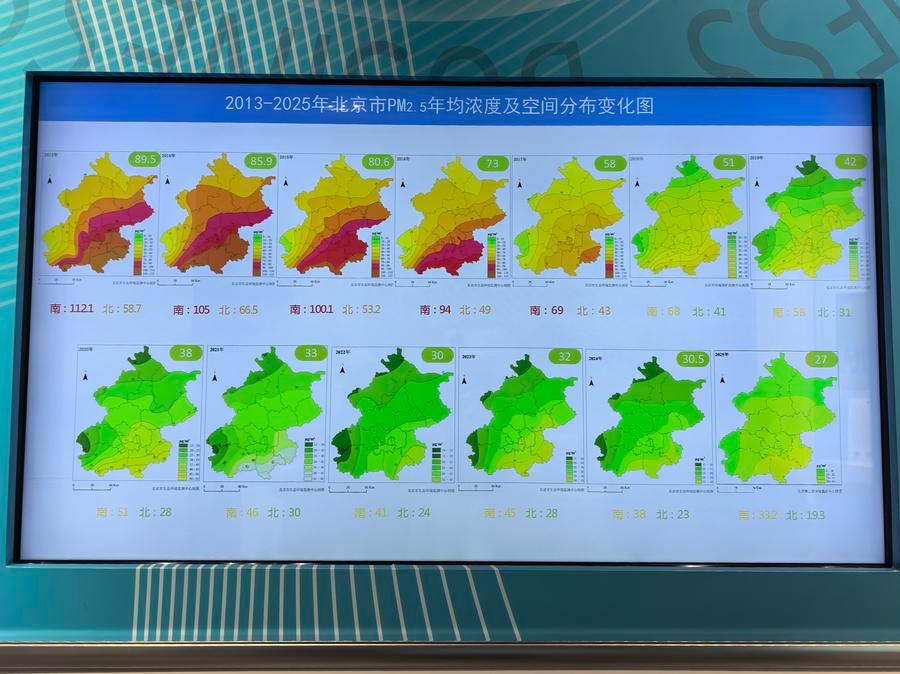 SMARTER ENVIRONMENTAL GOVERNANCE Beyond monitoring pollution, Beijing has built a data-driven environmental governance system that links monitoring, regulation and enforcement in a closed loop from detection to action and follow-up evaluation. Developed by the center and known as the innovative regulation-monitoring-inspection linkage model, the system integrates artificial intelligence, the Internet of Things, satellite remote sensing and vehicle-mounted monitoring technologies to pull together environmental data from multiple sources onto a unified platform. "The system brings information that was once scattered across different departments onto a single platform," said Zhang Likun, director of the smart system division at the center, adding that this enables off-site enforcement and joint cross-sector actions involving housing, water resources and transportation, significantly improving the efficiency and precision of environmental management. Using more than 30 intelligent algorithms, the platform automatically analyzes data and identifies potential pollution risks, based on which monitoring staff identify the most pressing problems and forward them to enforcement departments. The approach has already drawn international attention. Clean Air Asia, an international nongovernmental organization focused on improving air quality across Asia, featured the system as a representative case study in its "China Air 2025" report. The model was also presented at the 2026 Better Air Quality Conference and recognized with the Certificate for Clean Air Best Practice Sharing. China has integrated ecological conservation into its modernization drive. As the country speeds up efforts under the Beautiful China Initiative, Beijing's experience demonstrates how technology can support more precise, coordinated and sustainable environmental governance. 。“今年长势不错,估计一亩地能产2000多斤,市场行情也好,每斤6元左右,每亩毛钱能卖1.3万元,真是咱老百姓致富的金‘蒜’盘啊。” 绥中县塔山屯镇大施宝村地理位置优越,气候、土壤等均适合种植独头蒜。像其他种植户一样,依托国家的好政策,在当地政府大力扶持下,10余年来,李海山在种植独头蒜的道路上稳步前进。“一开始是几亩、十几亩,到现在70亩。这项产业让我尝到了甜头,家里以前破旧的房子变成现在的二层小楼,车也不缺,小日子红红火火。” 别看李海山说得轻巧,其实,在生产经营过程中,他与家人付出了很多辛苦。每年的9月份,从山东采购独头蒜种子,然后放在院子里的通风、阴凉处。到了寒冷时节,还得拿到屋子里。
二 | “种子很娇气,存放时温度不能过高或过低,否则影响质量,来年开春种植后影响出苗率及产量。” 每年的3月初,开始种植独头蒜。10余天里,李海山与家人非常忙,几乎每天都吃喝在地里,生怕误了农时。种子下到地里,他还时刻观察水分大小、温度高低,目的是让独头蒜茁壮成长。“功夫不负有心人,今年我家能产十五六万斤独头蒜,产值近100万元,纯利润将近40万元。
三 | 另外,6月底二茬还可种植早熟玉米、大豆等,每亩还可增加收入1000余元。” 种植、管理、收获等方面均科学规范、合理有序,当地的独头蒜个头大、颜色好、口感佳,10余年来,名声在外。
四 | 每当收获季来临,种植户自己或通过农村经纪人,联系上四川、云南、重庆等地的客商,对方开着大货车及时赶过来,种植户不用将独头蒜运回家,在田间地头就将产品卖掉,省去了脱水、储存等环节。 据大施宝村村支书赵刚介绍,村民的市场嗅觉非常敏锐,加上村干部积极宣讲政策、大力帮扶、拓展市场,村民种植独头蒜的热情一年比一年高。“今年村里种植1000余亩独头蒜,村民还在临近村子承包了将近4000亩,共种植5000亩左右。产值能达到6000万元,纯利润2000余万元。” 为了让农业产业进一步“身价看涨”,塔山屯镇镇政府积极与有关部门联系,批复了几块大型晾晒场地,便于种植户晾晒独头蒜。该镇镇长孙雪说,受市场行情波动影响,有些种植户收获完不立即售卖,而是晾晒后储存在恒温库里。等到十一或年前年后卖,每斤独头蒜能达到八九元钱,进一步增加了种植户收入。
五 | “政府和广大种植户始终同频共振,在不断优化营商环境的同时,积极做好助手、帮手、抓手,加上村民科学种植、管理精细,致富的道路才能越走越宽阔。”孙雪说。
六 | Current article:http://epn3h3.senchuoshaozaodidia.shop/news/20260826_246.html Published on:05:33:31 |


